


-

 Scotland
 Whiskey
70cl
32,90 €
Whiskey
70cl
32,90 €39,90 €Unit price / und.UnavailableApunto de agotarse -
Scotland
Whiskey
70cl
39,49 €
42,90 €Unit price / und.UnavailableÚltima/s unidad/es
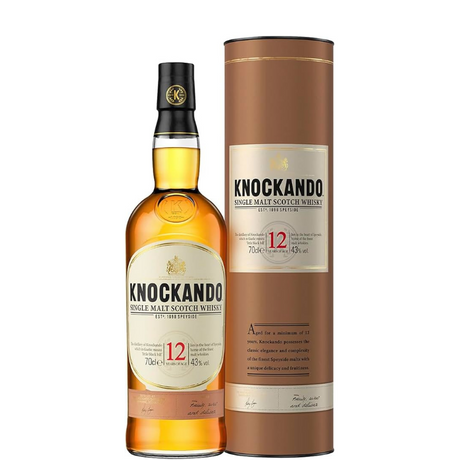

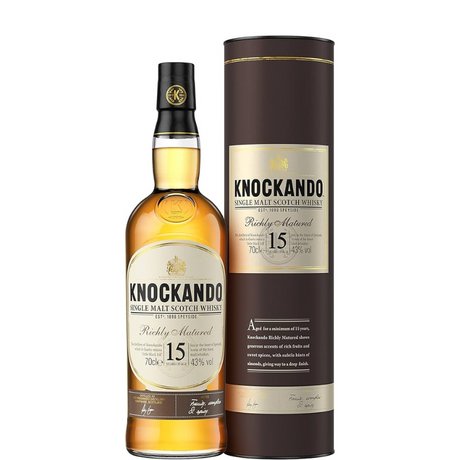
Despite his clear commitment, Thompson chose a bad time to found a whisky distillery. The market collapsed shortly after Pattison's collapse, and Knockando closed in 1900. Gin distillers W. & A. Gilbey & Co. took over in 1903 after buying the distillery for £3,500 and resumed production that year.
W. & A. Gilbey merged with United Wine Traders in 1962 to form International Distillers & Vintners (IDV). IDV expanded and modernized the distillery throughout the 1960s. In 1968, the floor malts were dismantled, and the following year, two new stills were added. IDV was purchased by Watney Mann in 1972 and later acquired by Grand Metropolitan. Knockando is now part of Diageo following the merger of Guinness and Grand Metropolitan in 1997. During this reorganization, IDV and United Distillers merged to form United Distillers & Vintners.
From 1971, Knockando was one of the first distilleries to begin marketing its whisky as a single malt rather than just as a component in blends. This early adoption meant that at one point it was among the top ten best-selling single malts in the world. Although it has since fallen from that list, it remains extremely popular, particularly in the French and Spanish markets.


